
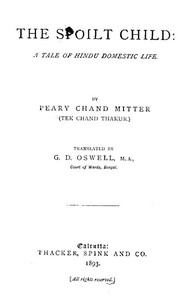
The Spoilt Child: A Tale of Hindu Domestic Life by Peary Chand Mitra
Peary Chand Mitra’s The Spoilt Child isn’t just one of the first novels written in Bengali—it’s a story that gets under your skin. Published in the 1850s, it holds up a mirror to family dynamics that still feel incredibly familiar.
The Story
The heart of the book is Matilall, the only son of a rich, indulgent man named Baburam. From the moment he’s born, Matilall is given every toy, treat, and privilege. His father’s love is shown through gifts, never discipline. Baburam’s wife and the family priest see the trouble brewing, but their warnings fall on deaf ears. We watch as Matilall grows from a bratty child into a reckless young man, wasting money, neglecting his studies, and falling into bad company. The novel follows the painful consequences of this upbringing, not just for Matilall, but for his entire family, showing how one person’s spoiled nature can unravel everything.
Why You Should Read It
You might think a 170-year-old domestic drama would feel dusty, but Mitra’s observations are razor-sharp. He writes with a gentle humor and a clear-eyed sadness. You’ll recognize Matilall in kids you’ve seen (or maybe even worried about raising yourself). The book isn’t just scolding parents, though. It paints a vivid, bustling picture of middle-class life in colonial Calcutta—the social pressures, the gossip, the hopes pinned on a son. Reading it feels like stepping into a different world that’s grappling with the same problems we do today: What does it mean to raise a good person? How do we show love without causing damage?
Final Verdict
This book is perfect for anyone curious about the roots of modern Indian literature, but you don’t need to be a scholar to enjoy it. If you like character-driven family sagas or stories that explore the gap between good intentions and bad outcomes, you’ll find a lot here. It’s also a great, accessible entry point into 19th-century Indian life. Think of it as a wise, slightly stern, but ultimately compassionate grandfather telling you a story that’s as relevant now as it was then.
There are no legal restrictions on this material. Feel free to use it for personal or commercial purposes.





Nancy Scott
10 months agoFinally a version with clear text and no errors.