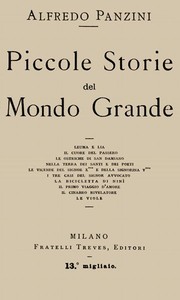
Piccole storie del mondo grande by Alfredo Panzini
If you pick up Alfredo Panzini's Piccole storie del mondo grande expecting a grand historical novel, you'll be surprised—in the best way. This isn't a single, linear story. Instead, it's a series of short sketches, vignettes, and character portraits that, when put together, create a stunning mosaic of Italian life during a time of huge upheaval.
The Story
There's no central plot to follow. Instead, the book acts like a window, hopping from village to city, from a country kitchen to a modern office. Each chapter is a self-contained world. In one, you might watch a family debate the scandalous idea of their daughter getting an education. In another, you'll follow an old man as he sees an automobile for the first time, convinced it's the devil's work. Panzini captures the comedy and the tragedy of everyday people navigating the end of one world (rural, traditional) and the confusing birth of another (industrial, national). The 'big world' of the title—unification, war, technological revolution—is always there, but we only see its reflection in the small, personal struggles of his characters.
Why You Should Read It
I loved this book for its incredible warmth and quiet observation. Panzini doesn't judge his characters; he presents them with a mix of humor and deep sympathy. You won't find heroic figures here, just real people: stubborn, hopeful, scared, and funny. Reading it feels like listening to a wise, slightly mischievous grandfather tell tales about 'the old days.' The magic is in the details—the description of a simple meal, the way a person's pride shows in their posture, the unspoken rules of a small community. It makes a period of history I only knew from dates and politics feel immediate and deeply human.
Final Verdict
This book is perfect for anyone who loves character-driven stories and a sense of place. If you're a fan of writers like Italo Calvino or even the quiet moments in Elena Ferrante's work, you'll find a kindred spirit in Panzini. It's also a great, accessible entry point into Italian history, seen from the ground up. Because the stories are short, it's easy to dip in and out of, but I warn you—you'll likely get hooked by the gentle rhythm and want to read just one more. A hidden gem for thoughtful readers.
This publication is available for unrestricted use. It is now common property for all to enjoy.