
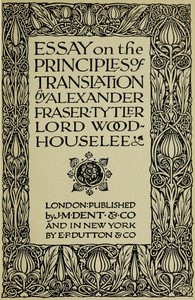
Essay on the Principles of Translation by Lord Alexander Fraser Tytler Woodhouselee
Published in 1791, Alexander Fraser Tytler's Essay on the Principles of Translation isn't a story with characters and a plot. Think of it more as a manifesto, or a very persuasive rulebook, for the art of translation. Tytler was frustrated. He saw translations that were either too slavishly literal, making for clunky reading, or too loose, losing the author's original voice. He wanted to find a better way.
The Story
There's no narrative arc here, but there is a clear argument. Tytler lays out his famous three laws right at the start: A translation should give a complete transcript of the original's ideas. It should match the style and manner of the original. And it should have all the ease of original composition. He then spends the rest of the essay unpacking what these rules really mean, using examples from classics like Homer's Iliad and Cicero's speeches. He compares different English translations, acting like a literary judge, explaining why one version feels 'right' and another feels awkward or dishonest. The book is his case for why translation is a creative act of balance, not just a mechanical swap of words.
Why You Should Read It
This is a book that makes you see reading in a new light. Even though it's over 200 years old, Tytler's core question—how do we faithfully move ideas between languages?—is incredibly relevant today, whether you're reading a Japanese novel, watching a Swedish show with subtitles, or using a translation app. His writing is clear and direct for its time. Reading his critiques of 18th-century translations feels like listening to a sharp, opinionated friend dissect a movie adaptation. You don't have to agree with all his judgments (and many modern translators don't!), but you'll start forming your own opinions about what makes a translation work.
Final Verdict
This is a niche but fascinating read. It's perfect for language lovers, aspiring writers, or anyone deeply curious about how books travel the world. If you enjoy peeking behind the creative process, this is a foundational text. Be warned: it's an 18th-century essay, so the language, while clear, is formal. It's not a breezy beach read, but a compact, thought-provoking one. For a modern reader, its true value is gaining a historical benchmark—seeing where our current conversations about translation even began. It’s a short investment of time for a big payoff in perspective.
This digital edition is based on a public domain text. You are welcome to share this with anyone.
Mark Harris
1 year agoCompatible with my e-reader, thanks.